Valve torque: a key factor in system efficiency
When selecting an actuated ball valve for HVAC, water treatment, compressed air, or industrial automation, one of the most important technical parameters to consider is valve operating torque.
Torque is the rotational force required to turn the ball inside the valve from the fully open position to the fully closed position and back. In an automated assembly, the actuator must be capable of generating sufficient torque to overcome all operating forces under the expected service conditions.
The torque required to operate a ball valve can vary according to several factors, including valve seat design, operating pressure, differential pressure, media characteristics, temperature, operating frequency, and friction between internal components. Since these variables directly affect valve operation, torque values should always be considered when selecting a valve and actuator combination.
Benefits of low torque ball valves
A low torque ball valve is specifically engineered to reduce the force required to operate the valve. Compared to standard configurations, it requires significantly less operating and breakaway torque, allowing the use of lighter and more compact actuators. This can help reduce the overall size of the automated assembly and may also contribute to lower equipment costs, making low torque valves an attractive option for price-sensitive automation projects.
Lower torque requirements may also contribute to reduced power consumption during valve operation. While the impact on a single valve may be limited, the potential energy savings become more significant in systems with multiple actuated valves, helping lower operating costs and improve energy efficiency.
Another advantage is improved long-term durability. By reducing friction between the ball and seats, low torque ball valves help limit wear over time, supporting reliable performance over extended service life and making them suitable for long-term operation.
Standard torque vs low torque ball valves: which should you choose?
Selecting between a standard torque and a low torque ball valve must be evaluated together with the performance requirements of the application.
Traditional ball valves remain the preferred choice in applications involving dangerous fluids, closed environments or where media is handled at low pressure. In these situations, the higher seat compression typically found in standard valve designs provides enhanced sealing performance and increased safety margins.
Low torque RuB valves may be considered in applications handling air or water, installation is price sensitive, where operating pressure is above 150 PSI, but differential pressure does not exceed 230 PSI. In these conditions, the possibility of using smaller actuators can provide a practical and cost-effective automation solution.
Detailed information regarding valve performance, operating limits, and torque values is available in the relevant product datasheets and should always be reviewed during the selection process.
RuB ball valves for actuation
To meet the growing demand for efficient valve automation, RuB offers a complete range of full port brass ball valves designed specifically for actuator mounting.
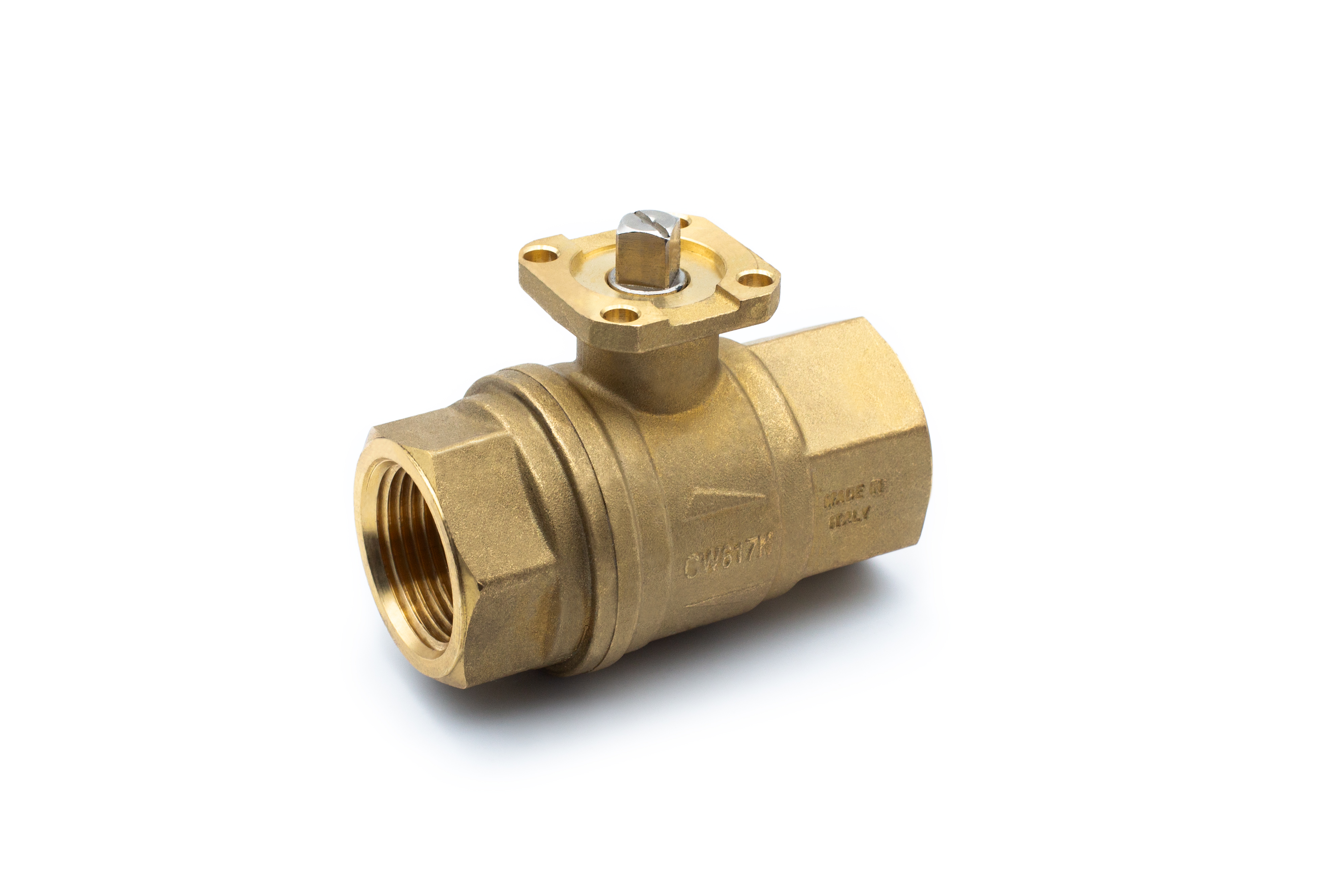
The RuB S.6439 series is available in both standard and low torque configurations and features an unplated full port brass body, female x female NPT threads according to ANSI B1.20.1, sizes from 1/2" to 2", and an ISO 5211 mounting flange for direct actuator installation. The valves are rated for 600 PSI non-shock cold working pressure.
Performance and durability are supported by a valve design with self-compensating seats that maintain consistent operation over time by offsetting wear throughout the product lifecycle. The series has also successfully completed 100,000-cycle life testing and it comes with a lifetime warranty.
RuB valves are available as standalone products or as fully assembled units with Compact Power Electric Actuators or EA pneumatic actuators, offering a complete and ready-to-install automation solution.
Choosing the right actuated ball valve for your application
There is no single actuated ball valve suitable for every application. By offering both standard and low torque configurations, RuB allows professionals to select the most suitable solution based on real application needs rather than a one-size-fits-all approach. For correct sizing and selection, always refer to the product datasheets or contact the RuB technical team for support.